REPORT ON VISIT to SAMOA 2ND TO 9TH NOVEMBER 2025
By Philip and Cristy Newall
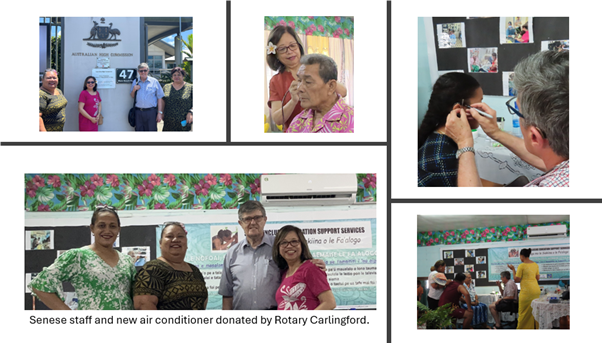
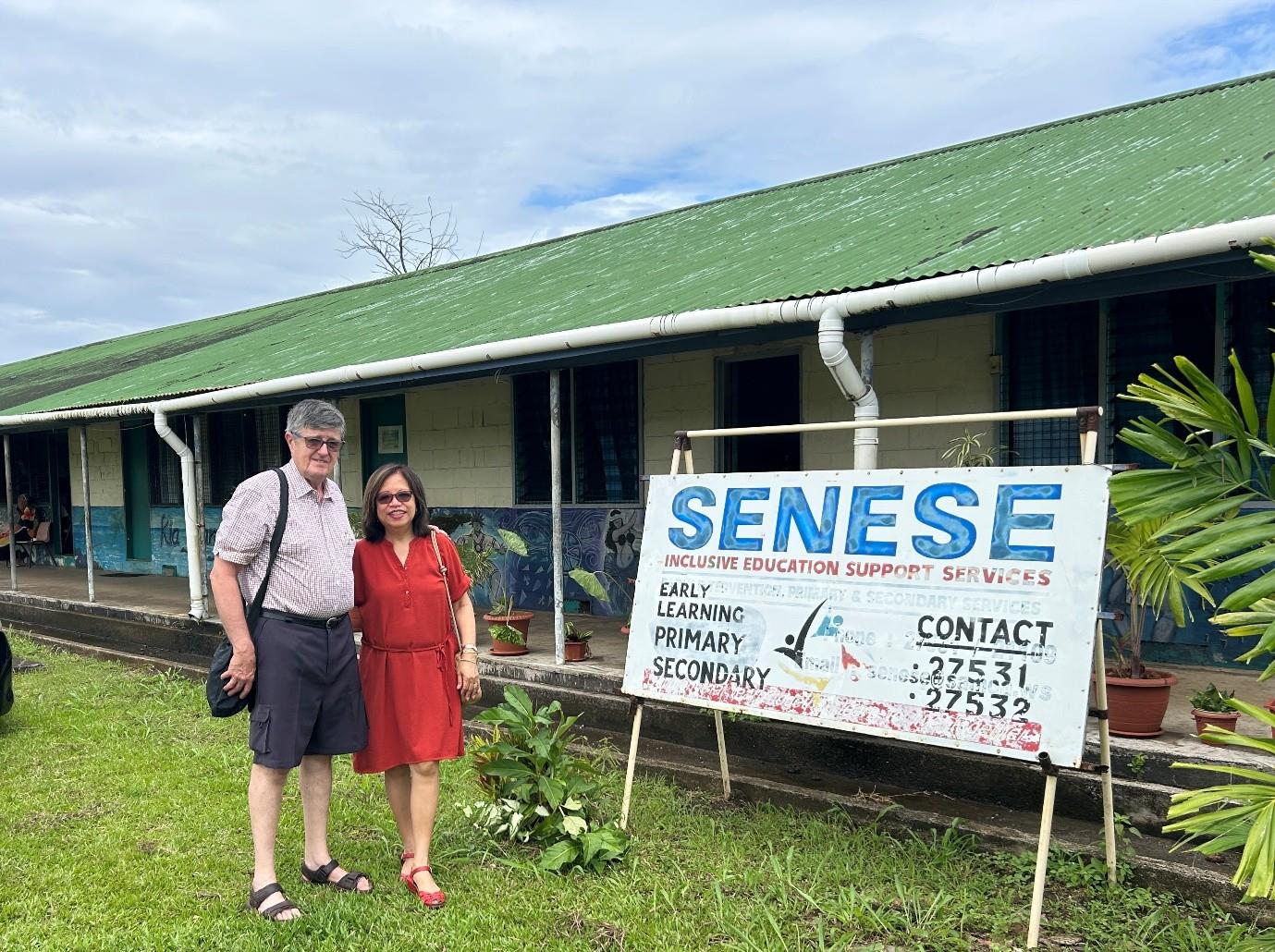
We ran a voluntary clinic in Samoa at the Senese Centre for Inclusive Education, assisted by Naomi and Rowena who are local staff from the centre. It was our 26th visit since 2008 and was rather exhausting. This is a Rotary Australia World Community Service project. Contributions to the project can be made online here.
We took 600 pieces of size 675 hearing aid batteries and 53 donated pre-loved hearing aids donated by Amplifon and many hearing aid accessories donated by Hearing Matters Australia and others.
It was possible to take the lathe and tools supplied by Ears Inc and we visited a local dentist who can supply the materials needed to make custom made earmoulds. We practiced this process in Australia before we left for Samoa we will try to begin manufacture on our next trip in March 2026. We had also sent three parcels to the centre since our last visit in April funded by our Rotary Club and others.
We used our Qantas frequent flyer points to arrange flights and we paid for hotel accommodation and meals, but Senese staff now have a vehicle and drove us about, so we did not need to hire a car on this trip.
We assessed the hearing of 27 adults and children and fitted 17 new hearing aids (which were funded by a grant from DFAT administered by the Royal Australian Collage of Surgeons) and 18 more with donated used hearing aids from Amplifon, which Hearing Matters Australia volunteers cleaned and checked for us. We left many other aids to be fitted by local staff and took 25 earmould impressions which will be made up into custom made earmoulds at no charge by GN Resound, thanks to arrangements made by Amplifon.
There are now 716 people on the Samoa database fitted with hearing aids and many others were fitted on earlier trips before it was created.
We took some tubing to repair equipment for the dentist (Emosi) in the more remote island of Savaii, who has been given a very significant amount of support by John Green. He came to the clinic to collect it and told us that his hospital vehicle has broken down and cannot be repaired, which is a pity as he does a lot of outreach work to remote locations, encouraging dental hygiene amongst children.
On the last day in the clinic, we were invited to the Australian High Commission Samoa and we met with the Acting Deputy High Commissioner and his assistant. We told them about our work and they issued a Facebook post about it after our visit. We discussed a grant which they have available as we wish to upskill the teaching and other staff dealing with hearing-impaired students. We will try to apply for it, but there is a November 21st deadline.
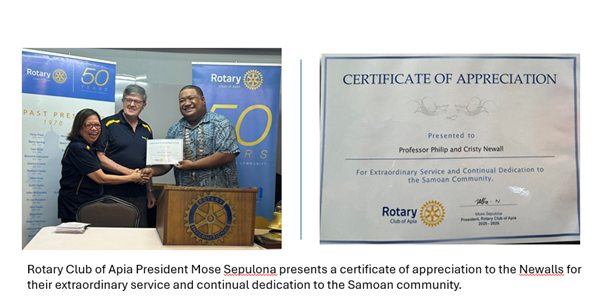
Our Rotary Club donated an air conditioner for the clinic, which was a blessing as it is very hot in the centre. They also funded the purchase of consumables and other items for use in the clinic. We had to pay for the connection of the air conditioner to an electricity a supply ourselves, as this had not been included in the installation. We are grateful to the Rotary Club of Apia (and especially Maria Ines and Marco Kappenberger) for help with this matter. We attended one of their meetings and the Club presented us with a certificate of appreciation.
Most of the clients we saw had very severe to profound hearing losses. We saw faces light up as they heard sounds.
The children in particular will now be able to hear more easily in the classroom and this will eventually help them to gain employment. Sign language interpreters will also help them, of course.
The adults were finding life difficult if they were in employment and the older ones were very isolated due to their hearing loss. They were not able to take part in everyday family life. We had some amusing stories, once we fitted them, about their family forgetting that they could now hear family conversations which were taking place!
It was all very rewarding and this would not have been possible without the help of the many organizations mentioned in this report.
We must stress that many other Australian volunteers have helped with this work over the years.